Asset & fleet hierarchy
Govern customers, sites, fleets, equipment, components, lubricant details and approved sample points with controlled identity context.
ZYLON SUITE · OIL CONDITION MONITORING INFORMATICS
Zylon OCM LIMS is a specialised laboratory informatics application for condition-monitoring programmes serving industrial plants, utilities, mining, construction and transport fleets. It connects asset identity, sample history, analytical testing, diagnostic rules, engineering review, approval and fleet-health oversight in one traceable operating model.
These views use the actual populated Zylon OCM LIMS fleet-health capture. The gallery shows the complete analytics screen, focused evidence from the same capture and the governed Zylon Suite access layer.
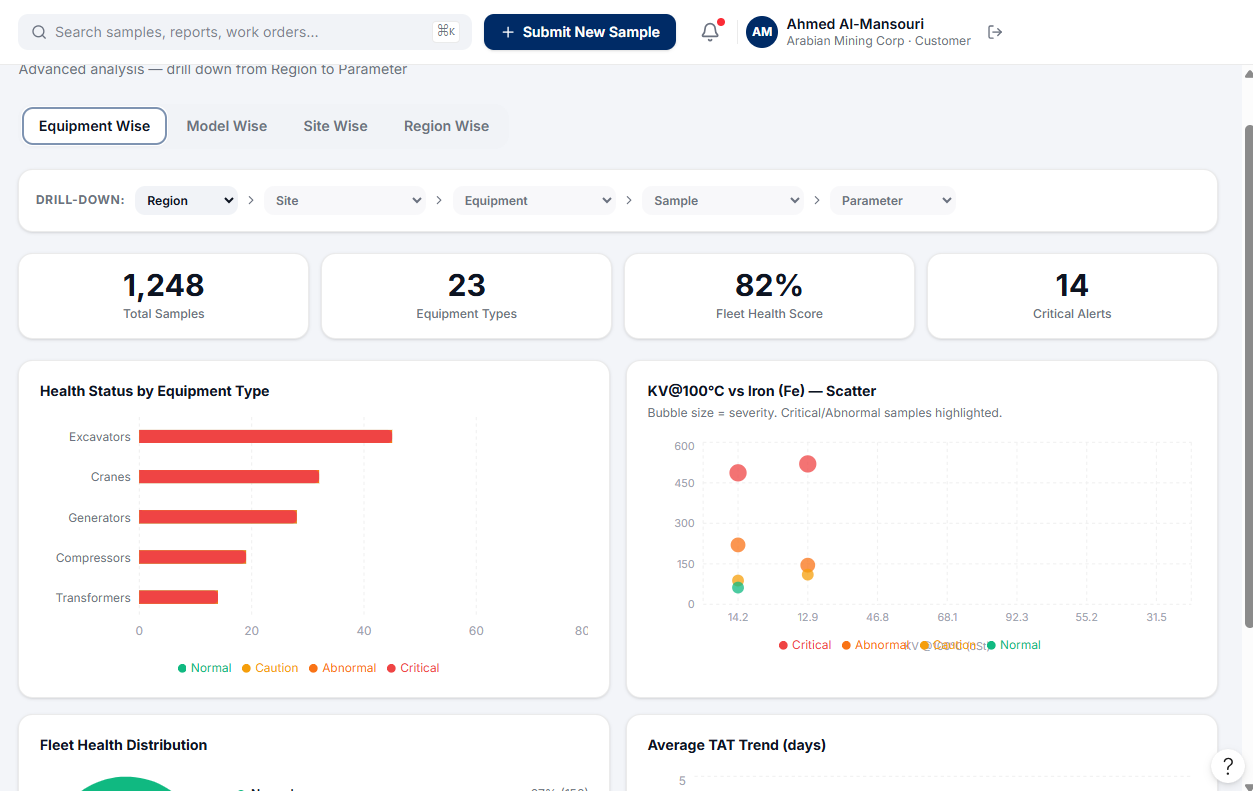
The complete captured OCM LIMS dashboard combines asset population, sample condition, diagnostic severity and trend visibility for engineering and laboratory oversight.
A focused crop of the real capture brings condition status, severity and asset-health prioritisation into clearer view without substituting a mockup.
The same operating capture is enlarged around trend and analytical areas used to support engineering interpretation and maintenance decisions.
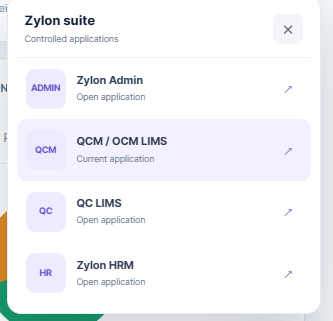
The actual Suite launcher shows the common application access layer surrounding the specialised OCM laboratory workflow.
Process controls
Each capability is organised around accountable workflows, governed data, explicit responsibilities and management visibility rather than isolated form entry.
Govern customers, sites, fleets, equipment, components, lubricant details and approved sample points with controlled identity context.
Capture operating hours, service history, collection method, bottle identity, sample condition and chain-of-custody evidence.
Allocate viscosity, wear metal, contamination, additive and physicochemical testing according to asset class and approved programme rules.
Apply equipment-aware limits, rate-of-change logic, severity grading and engineering interpretation with attributable review.
Review repeated samples, maintenance events, lubricant changes, interventions and abnormal parameter trends in one timeline.
Prioritise critical assets, overdue samples, emerging conditions, review queues and customer reporting through governed dashboards.
Controlled workflow
Create the governed equipment, component, lubricant and sample-point context.
Validate identity, operating data, custody and sample condition before testing.
Execute the asset-specific analytical programme and capture controlled laboratory evidence.
Assess trends, severity and maintenance implications under assigned engineering responsibility.
Release authorised condition advice and retain the evidence supporting the maintenance decision.
Shared enterprise governance
Security and compliance are applied through identity, responsibility, workflow and evidence so governance does not disappear when a process crosses modules or sites.
Apply organisation, site, role and responsibility context to records and workflow actions.
Use controlled states, approvals, escalations and segregated responsibilities for critical decisions.
Maintain attributable activity and change history around important records, reviews and approvals.
Support requirements, verification, controlled change and customer validation evidence appropriate to intended use.
Operational outcomes
Identify abnormal wear, contamination and lubricant degradation before failure using governed condition evidence.
Keep analytical values, trend logic, engineering interpretation and approval history connected to each recommendation.
Maintain samples, results, diagnostics, maintenance events and actions across the component lifecycle.
Compare risk, sampling compliance, review status and condition across sites and asset populations.